


2-Minute Attention Reset
A fast reset when your attention feels scattered.
1
Put the phone down.
2
Take one slow breath.
3
Notice what pulled your attention away.
4
Choose one clear next action.
5
Return intentionally.
Resources
Actionable guides, short exercises, attention resets, and checklists to help you regain focus, reduce distractions, and build healthier digital habits—without hype or fluff.
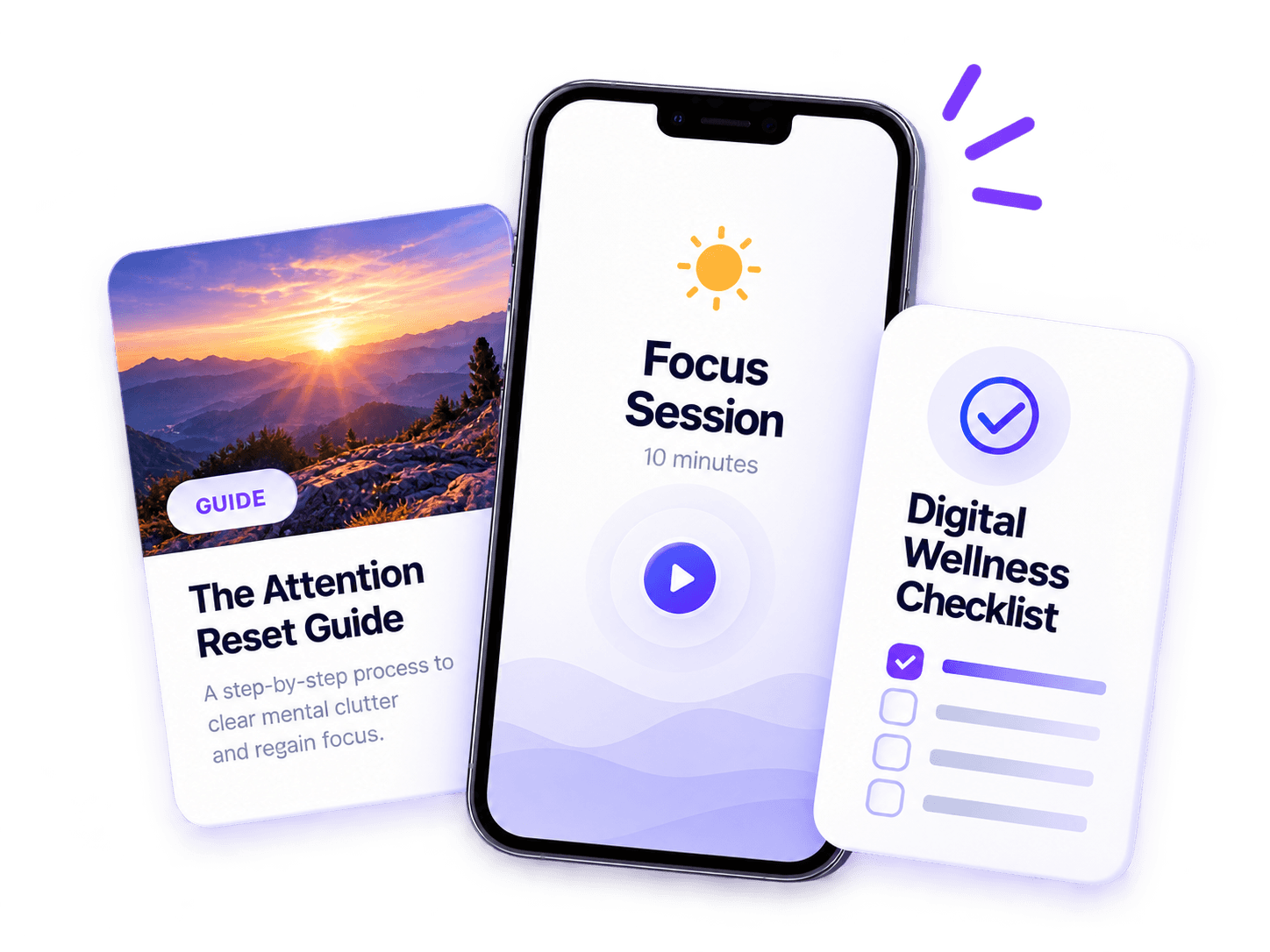
Start here
Four practical starting points—each with full guidance on this page.
A short process to recover after scrolling, interruptions, or losing your place.
Use the resetPrepare, work with intention, and reflect—without overcomplicating your day.
Read the guideNotice triggers and choose a small replacement you can repeat.
Read the guideA practical list to audit notifications, screens, and evening routines.
View checklistStart in 5 minutes
Short exercises you can use immediately—no downloads or accounts required.
A fast reset when your attention feels scattered.
Put the phone down.
Take one slow breath.
Notice what pulled your attention away.
Choose one clear next action.
Return intentionally.
Set up a short, realistic focus block before you begin.
Choose one task.
Remove obvious distractions.
Silence unnecessary notifications.
Set a short focus period.
Begin with one clear intention.
Name what pulled you away and decide your next move.
What distracted me?
Was it internal or external?
What can I remove?
What can I postpone?
What is my next useful action?
Explore by category
Browse by theme—every link goes to real content on this page or a published article.
Short exercises to recover attention in the moment.
Prepare for deeper work in small, realistic sessions.
Replace automatic phone habits with intentional choices.
Shape your environment for calmer, healthier tech use.
Deep dives
Full walkthroughs you can save, skim, or return to whenever you need a reset.
Use this when you notice mindless scrolling, a string of interruptions, or the feeling that you lost track of what you were doing. It is a practical pause—not a medical treatment.
When to use it
After scrolling, switching tabs without purpose, or being pulled away from an important task.
Pause and put your device down or turn it face-down.
Take one slow breath and name what you were trying to do.
Notice what pulled you away (notification, boredom, stress, habit).
Choose one small next action that serves your intention.
Return to that action for a short, defined period.
A lightweight structure for starting focused work. Adapt the timing to your day; the goal is clarity, not perfection.
Choose one clear task—not a whole project.
Remove avoidable distractions (tabs, notifications, physical clutter).
Work on that one thing for a short block you can finish or continue.
Take an intentional break away from screens when the block ends.
Notice what helped and what interrupted you—adjust next time.
When a phone or app habit runs on autopilot, this flow helps you intervene with kindness and specificity.
Identify when the behavior usually starts (time, place, emotion).
Notice what you usually do without judgment.
Pick a realistic alternative (pause, breathe, stand up, write one line).
Practice the replacement in low-stakes moments first.
After a few days, notice what improves and what still needs adjustment.
Use this as a periodic audit—not a scorecard. Check what is realistic for your life right now.
Recommended
 Guide
Walk through a short reset when your mind feels scattered.
Open resource Guide
Prepare your space and notifications before you begin.
Open resource Article
Read practical habit ideas on the Attention Anchor blog.
Open resourcePut it into practice
Attention Anchor helps you practice focus sessions, build habits, log urges, and use your phone with more intention—on your device, at your pace.


